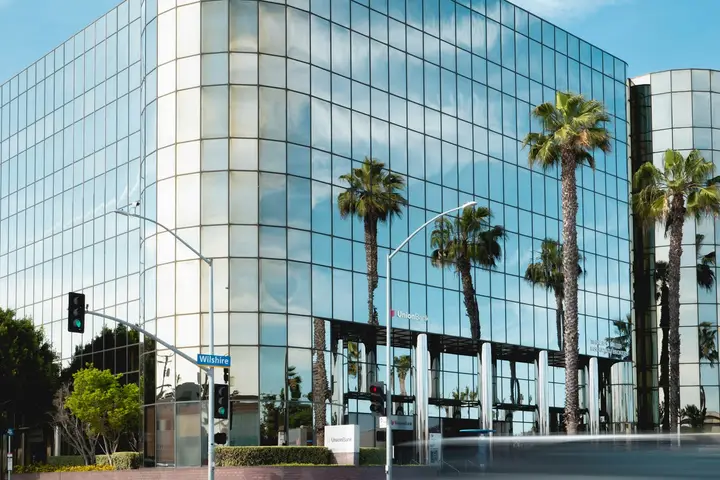
RentNew
DIFC
DIFC-Licensed Fitted Office in Index Tower
- 2,200 ft²
- Fully fitted
- Floor 19
AED 660,000/yr
AED 300/ft²
Area guide · Dubai
<p>Dubai's common-law financial free zone: DFSA-regulated and non-regulated licensing, Grade A offices, DIFC leasing law and 2026 market data.</p>
Live in DIFC
DIFC
AED 660,000/yr
AED 300/ft²

DIFC
AED 4.3M
AED 3,200/ft²

DIFC
AED 615,000/yr
AED 300/ft²

DIFC
AED 2,744,000/yr
AED 280/ft²

DIFC
AED 17.2M
AED 4,200/ft²
The Dubai International Financial Centre is not simply a premium office district; it is a separate legal jurisdiction inside Dubai, with its own company law, courts, financial regulator and property registry. That is the reason firms pay more to be here, and it is also the reason a DIFC office decision has to start with regulation rather than with floor plans. This guide explains what DIFC offers occupiers and investors, how licensing and leasing work in practice, and when the premium is — and is not — worth paying.
DIFC is a financial free zone established under federal and Dubai law, with a framework modelled on English common law. Four institutions shape every commercial decision here:
For a bank, asset manager, insurer, law firm or family office, that combination — a recognised regulator, predictable courts and a deep professional ecosystem on one campus — is the product. The building is secondary.
DIFC's own H1 2026 results, published in July 2026, reported:
These are the centre's own published figures. What they tell an occupier is simple: the competition for space in DIFC comes from regulated firms that have little choice about where they locate, which is why vacancy stays tight even when the wider market pauses.
Availability ranges from DIFC business-centre seats and serviced suites, which suit newly licensed firms, through fitted strata offices of a few hundred to a few thousand square feet in towers such as Index Tower and Burj Daman, to full floors in institutional buildings. Large contiguous requirements are the hardest to satisfy: new Grade A space has largely been pre-committed before handover.
DIFC data is harder to benchmark than the rest of Dubai, because its leases and property transactions are registered with DIFC rather than the Dubai Land Department; Savills, for example, notes that DIFC is excluded from DLD leasing data. Treat any single figure with caution.
For strata office purchases, there is no reliable, regularly published DIFC average price comparable to DLD-based mainland data. Pricing should be established from recent DIFC registry evidence in the specific building.
The first question is whether the activity is a financial service. Firms carrying on financial services in or from DIFC must be authorised by the DFSA, which assesses the business plan, capital, systems and the fitness and propriety of key individuals. Non-financial firms — consultancies, legal and professional services, holding companies, headquarters functions and many family-office structures — are registered with the DIFC Registrar of Companies without DFSA authorisation.
Operating companies need premises within DIFC, and visa allocation is linked to the space held. Business centres and co-working operators inside DIFC provide entry-level desks for newly licensed firms. Some structuring vehicles, such as certain prescribed companies, have different requirements; the specific entity type should be confirmed with the DIFC Registrar before signing anything.
Leases in DIFC are governed by the DIFC Leasing Law (DIFC Law No. 1 of 2020) and the DIFC Real Property Law, rather than the mainland tenancy framework. In practice this means DIFC leases are drafted and registered differently from mainland Ejari tenancies, and the law deliberately leaves commercial parties more freedom to agree their own terms. Tenants should take DIFC-specific legal advice on renewal, termination and rent review rather than assuming mainland protections apply.
Dubai Executive Council Resolution No. 11 of 2025, which lets Dubai free zone companies operate on the mainland through a DET branch licence or permit, excludes financial institutions licensed in DIFC. A DIFC-regulated firm that also wants to serve mainland clients directly will usually need a separate structure or advice on the cross-border position, often with a related company in Business Bay or elsewhere on the mainland.
DIFC retail is a hospitality and services market rather than a shopping destination. Gate Village and Gate Avenue house a dense concentration of high-end restaurants, cafés and galleries that trade heavily on weekday lunches, after-work dining and client entertaining. Service retail — banks, clinics, wellness, dry-cleaning, convenience and premium coffee — serves the daytime population. New space at DIFC Square includes dining tenants. The opportunity is for operators who can trade on spend per head from a professional audience, not on general footfall.
The deciding factor is regulation. A DFSA-regulated firm has no real alternative. A non-regulated firm should weigh whether the DIFC address, common-law courts and client proximity justify the premium over Business Bay, Downtown Dubai or Sheikh Zayed Road. Many groups split the difference: a regulated or holding entity in DIFC and a larger operational team on the mainland.
Yes. DIFC is a financial free zone with its own laws, the DFSA as regulator and the DIFC Courts. Companies are licensed by the DFSA (regulated) or the DIFC Registrar of Companies (non-regulated), not by DET.
Only if you carry on financial services in or from DIFC. Consultancies, professional firms, holding companies and many family structures register with the Registrar of Companies without DFSA authorisation.
Cavendish Maxwell reported DIFC rents up 17.1% year on year in H1 2026, and fitted space was reported at around AED 400 per sq ft in 2025 Knight Frank data. Rents vary sharply by building; ask for recent comparable lettings.
Generally, operating companies need physical premises in DIFC, though entry-level business-centre options exist. Some structuring vehicles have different requirements, so confirm with the DIFC Registrar for your entity type.
No. DIFC leases sit under the DIFC Leasing Law and DIFC property registry, not the mainland Ejari system.
A Dh100 billion second phase of DIFC announced in January 2026, planned at around 17 million sq ft for up to 125,000 professionals. No completion date had been published at the time of writing.
We advise on DIFC requirements from first-licence business-centre space through to full floors, and on strata office acquisitions with the DIFC-specific diligence they need. See current commercial listings or contact us for a requirement-led search.
Company and ecosystem data is from DIFC's H1 2026 results. Market data is from Cavendish Maxwell (H1 2026), Knight Frank via Gulf News (2025) and Savills (Q2 2026). Rents are indicative. Licensing and leasing information is general guidance; confirm specifics with the DFSA, the DIFC Registrar of Companies and qualified DIFC counsel. Nothing on this page is an offer or investment advice.
Talk to an advisor
Size, area, fit-out, parking, budget and move-in date — send it once. Not every space we handle is on the website, and the right one is often off-market.